Whetstone – Sharpening Your Tools for Life

Why Get a Whetstone?

Nobody likes wasting money!

And if you have ever thrown away dull scissors, knives, or razors, then you have needlessly wasted money.

The thousands of years old solution? A whetstone! This simple sharpening tool can keep your cutting tools sharp and safe while saving you a bundle over the long run.


Best Whetstone on the Market

Have a seriously damaged blade that needs repairing? Or are you just trying to get your paring knife to cut a little better?

Good news! The Finew Four-Sided Professional Whetstone Sharpener can help with both projects!

While many synthetic whetstones are double-sided, the unique four-sided design of Finew’s sharpening stone allows you to tackle many different types of projects and do them with precision. It also comes in a kit that includes all of the accessories you need to start sharpening your tools immediately.


What Exactly is a Whetstone?

The now archaic English word “whet” means “to sharpen.” Today, the term is mainly only used in the idiom “whet one’s appetite” and the more common name for a sharpening stone, “whetstone.”

Whetstones have been used for thousands of years across many cultures. They are primarily employed to keep sharp tools from becoming blunted, since dull blades are both inefficient and unsafe. Before the age of cheap and disposable consumer goods, damaged blades were also quite expensive to replace.

With the recent renewed interest in high-quality consumer goods, there has also been in a renewed interest in high-quality tools to keep those goods performing at their peak. Whetstones will ensure that all high-quality blades stay that way.


Advantages of Having a Whetstone in a Kitchen or Workshop

Having a whetstone on hand can save you tons of time and hassle!

What do you are in the middle of preparing a large meal and you notice that your knife is dull? Do you continue and risk having the knife slip and cut you? Do you press on knowing that all the chopping will take much longer?

If you have a sharpening stone at the ready, then you can quickly return your blade to its original glory!

Likewise, if you have one at the ready in your workshop or at your crafting station, you will be prepared for any chips or dullness in your scissors, knives, and other bladed tools. This is especially important if you make custom projects like woodcarvings. Why make your customers wait? Make sure you have a whetstone ready to go!

Chef’s swear by simple tips like this, including wearing compression socks for long days, and always having a whetstone nearby for a quick knife tune up.


SmashGoods Popular Content

We analyze the air pulse and pressure wave with this suction toy rose toy.


What Tools Can Whetstones Sharpen that Other Sharpeners Cannot

Do you have a dull axe? A blunted butcher knife? An old chisel or other carving tool? An inefficient drill?

Hopefully you have a whetstone!

While there are lots of different types of sharpening tools on the market, only whetstones allow the flexibility to sharpen pretty much anything with a blade. There is no need to have 10 different sharpening devices when you have a whetstone!

In addition, once you get used to them, sharpening stones can be used to your blades to custom angles.


Types of Whetstones

In the broadest sense, whetstones can be divided into two categories: natural and artificial.

Natural:

As the name implies, natural whetstones are quarried rocks that are used to sharpen various tools. Typically, natural whetstones are relatively expensive, though they offer little (if any) advantage over artificial whetstones. They are more often prized for being rare and beautiful.

The most famous natural whetstones are Japanese waterstones, which must be lubricated with water instead of oil.

Artificial:

Artificial whetstones, sometimes called synthetic whetstones, are great because they are not terribly expensive to produce and offer a consistent particle size. This allows them to sharpen tools in an even way.

Though most people tend to want products that are labelled “natural,” most people are better off with synthetic whetstones since they offer a more even sharpening surface.


What are Whetstones Made Of

Natural whetstones are made of different types of quartz, often novaculite. Artificial whetstones are made of a ceramic like silicon carbide or of aluminum dioxide.


Different Grades of Whetstones and Uses

Like sandpaper sheets, whetstones have different grades, or grits, that indicate coarseness. Note that many sharpening stones are double sided, so they will have two different grades. Also, remember that lower grades are coarser than higher grades.

Coarse Stones:

Stones with grades under 1000 are considered coarse stones. They are used to get severely damaged tools back on the right track. For example, coarse stones can help get rid of nicks in the blade very easily.

Medium Stones:

Medium stones have a grade between 1000 and 3000. Lower medium grade stones can be used to revive extremely blunted blades. Higher medium blades can be used to sharpen a dull blade. It is important to note, however, that excessive use of medium stones will quickly wear down a blade.

Finishing Stones:

As the name implies, finishing stones help get a tool ready for use. They have grades from 4000-8000. They can be used more often and will help keep your knives, scissors, and razors working like new. A high grade will be useful for any precision or refining work you plan on doing.


Best Whetstone on the Market

You will often need to use more than one grit to sharpen a blade correctly. For this reason, we recommend using Finew’s Four-Sided Professional Whetstone Sharpener. It includes grit grades of 400, 1000, 3000, and 8000.

Since this whetstone comes in a kit, it includes everything you need to transform you damaged blades into safe and effective ones once again. The set includes a non-slip bamboo board, an angle guider, and a leather strop for follow-up polishing.

In addition, Finew’s whetstone can be lubricated with water and is ready to sharpen after soaking for just ten minutes!


Tips and Tricks to Using a Whetstone

Many people avoid getting a whetstone because they mistakenly think that they are too difficult to use. While it is true that you will need to develop a certain technique, with a little practice, you will be sharpening like a pro.

Thanks to the innovation of the internet, there are many videos and tutorials available to help you as you learn to sharpen your tools on a whetstone. As you practice, however, remember to keep the following things in mind:

  • Make sure the whetstone is secured to a solid surface before you use it.
  • Sharpen the tool so that the sharp edge faces away from you. Do this by running the blade along the whetstone at a 15-20 degree angle for kitchen knives. A blade guide may be helpful if you are unsure or if you are sharpening a tool other than a knife.
  • Keep your fingers out of the way of the blade!
  • Do not run the blade in a straight line. A wide circular motion will yield the best results.
  • Repeat this several times for each side of the blade.
  • If you have a very dull tool, first sharpen both sides of it on the coarser side of the whetstone. After that, finish it off of the finer side of the stone.

Do Whetstones Need to Be Soaked in Water Before Using Them?

Whetstones are so named because the word “whet” means “to sharpen.” It is unrelated to the more common word “wet.”

Despite the etymological difference, many people think the two are related because whetstones are usually soaked in water or covered in oil before use.

Why?

Whetstones usually work better when wet because this helps get rid of waste material that is created when a blade is sharpened. Some stones should be soaked in water, but others need to be covered in oil. The two yield similar results, but some natural stones should never be used with oil as it will damage them. Your stone will come with directions that indicate which is best for your particular stone but, when in doubt, use water.

Typically, soaking in slightly warm water for about a half an hour will do the trick. If you are not sure, just soak the stone until it stops releasing bubbles.

Technically, you can skip this step, but you will not have results that are as good. It will also make your whetstone wear out faster. Even though it takes some time, don’t skip this step if at all possible!


What’s a Slurry?

A slurry is a mixture of water and whetstone dust. You will see this pasty material begin to accumulate on your tool as you sharpen it. Though it may look gross and you may be tempted to rinse it off, don’t do it! The slurry is actually helping to sharpen the blade and should not be wiped off until you are done.


How to Clean and Store a Whetstone

One of the best things about whetstones is that they require very little maintenance.

You can rinse off your whetstone with water when you are done. Just make sure to soak it again before use. Also make sure you keep it away from extreme temperatures.

You can store coarse and medium whetstones in a water bath, but this is not recommended for finer stones.

You can also go over your whetstone with a specially made flat stone every once in a while. This will keep it even and sharpening like new.


Overview – Including The Best Whetstone

Whetstones keep your knives, scissors, razors, scythes, chisels, axes, and other blades in their prime! Sharp tools are much safer than dull ones, and taking care of your blades will save you time and money in the long run.

Our favorite whetstone available today is the Finew Four-Sided Professional Whetstone Sharpener. Not only does it include four different grit grades, but it also comes in a kit that includes everything you need to start sharpening your tools like a pro!

Posture Corrector – Do Back Braces Really Work?

No one should have to live with back pain. Have you ever experienced it?

Well, you’re not alone. Nearly 65 million people in America have recently experienced back pain. In fact, close to 8% of all adults have persistent or chronic back pain, making it the sixth most costly condition in the United States.

However, most cases of back pain are mechanical, meaning they are not caused by an underlying condition.

No. It’s improper alignment and posture that cause the majority of cases of back pain.

Check in on yourself right now as you’re reading this. Are you slouched on the couch? Sitting in an office chair with a curved back? Standing with your shoulders pushed forward?

Good posture doesn’t only stop pain, but it can also improve your health and well-being as well! (Just like other products that improve your well-being like the rose for women rose toy.)

Say goodbye to tension headaches, a common fall out of poor posture, and say hello to a happier mood and higher self confidence.

Mood and posture are commonly linked. Several studies have found that when you stoop, you have more negative thoughts.

Same could be said about self esteem. Research has shown that when people sit up straight, they are more likely to believe in themselves.

The Back

The back is an intricate and delicate design of bones, joints, ligaments and muscles. Just the slightest misalignment can cause strained muscles, sprained ligaments, ruptured disks, and troubled joints, all examples of back pain.

Proper posture helps create strong muscle fibers that can properly align and hold this delicate back design.

However, if poor posture becomes a habit, these muscles atrophy and can no longer hold the back in proper alignment. Thereby creating back pain.

Can You Retrain Your Posture?

Absolutely!

Holding a proper and healthy posture can rebuild the muscles in your back to hold it for you.

The simplest way to do that? Using a posture corrector.

These back braces are worn over the shoulders and across the back, pulling your body upright. After wearing one of these for several days, your body’s muscle memory will hold you in proper placement so that your back muscles begin rebuilding themselves.

It’s as easy as putting on a back pack, only without the extra weight!

You can wear it under your clothes and while you are doing normal, daily activities, like working, driving, doing house chores, or watching TV. You can even wear it while working out.

How Long Should You Wear a Posture Corrector?

Unlike instant cures relearning proper posture isn’t instantaneous. Most people find that they have successfully retrained their posture between 14 and 30 days for at least 2 hours a day.

However, 2 hours a day might be too much for a newbie. So, if you are new to back braces, start out at only 15 minutes a day and slowly add time over the next coming days.

There really isn’t a down side to trying a posture corrector! Don’t waste another moment of agony, and get yourself a posture corrector today!

The Best at Home Wok

With a simple design originating from China, today woks are used all around the world as one of the most versatile cooking pans.

Continue reading to learn more about this unique cookware!

What is a Wok?

The word “wok” literally translates to “cooking pot” in Cantonese.

Woks are traditionally high-walled, deep-shaped cooking pots, typically used in Chinese-style cooking. Woks with a flattened bottom are gaining popularity as they can be used on a stove-top; originally, they were made with rounded bottoms. Regardless, both designs still allow ease in stirring and tossing food.

Woks usually come with either one long, stick handle or with two loop handles on opposite sides of the pan. Sometimes the stick handle will also have a ‘helper’ loop handle to assist with handling.

What is its History?

There are various beliefs as to why the wok was created: due to a strong need to preserve fuel for cooking as it was a limited resource; lack of food and the wok made it possible to create a variety of dishes, in big portions, out of limited ingredients; or out of convenience as the versatile cookware allowed cooking an entire meal in a single cooking pot.

Historians are uncertain as to whether the wok was an invention from China or if it was a ‘borrowed idea’ from elsewhere. This is because the same sort of pan has been found to be used in India and other parts of Southeast Asia, such as Thailand and Laos.

Furthermore, Central Asian nomads have been known to adopt creations from several places for their own benefit and bring them along as they traveled. The Mongols, for instance, carried woks as they were portable and required little fuel and maintenance, making them fit with the Mongols’ traveling lifestyle very well. As a result, cultures would have been exposed to the wok wherever these nomads traveled.

Why Should a Wok be Used?

Its concave shape is what really puts woks to an advantage- it distributes heat much more evenly compared to the traditional frying pan. This ensures everything in the wok is cooked at the same time.

Source: it.wikipedia wok

The curved sides on woks allow for easier tossing of food to let all the ingredients mix properly; its long, deep sides also reduces the risk of spillage.

What is Wok Hei?

In literal Chinese translation, wok hei means “breath of the wok.”

Since woks are typically used over a high flame, it heats up to great temperatures. When the cooking process involves cooking oil inside the wok, the “breath of the wok” refers to the effect that happens when flames burst from inside the cookware.

Source: guide.michelin dining out what is wok hei

This occurs when the wok is being tossed and the cooking oil from inside the wok catches the high flame beneath it. When the fire subsides, this creates a smoky flavor among the ingredients.

What is the Difference Between a Cantonese Wok and a Mandarin Wok?

Cantonese woks have two loop or U-shaped handles, where each handle is placed on opposite sides of the wok. They are high-walled and concaved. Their design is suitable for serving large quantities of food. Although their handles make it a bit more difficult for tossing, Cantonese woks can still be used for everyday cooking.

Mandarin woks, on the other hand, have a round-bottom shape with a single long handle attached to one side of the wok. This handle may be cast with wood for better heat insulation. It also enables easier tossing of food, such as stir fry.

Other Popular Topics on SmashGoods

Rose Toy How to Use Rose Toy?

What is a Wok Made Of?

Woks are made out of many materials, and each material has its own benefits and features.

The most common materials used today are cast iron, carbon steel, stainless steel, and non-stick.

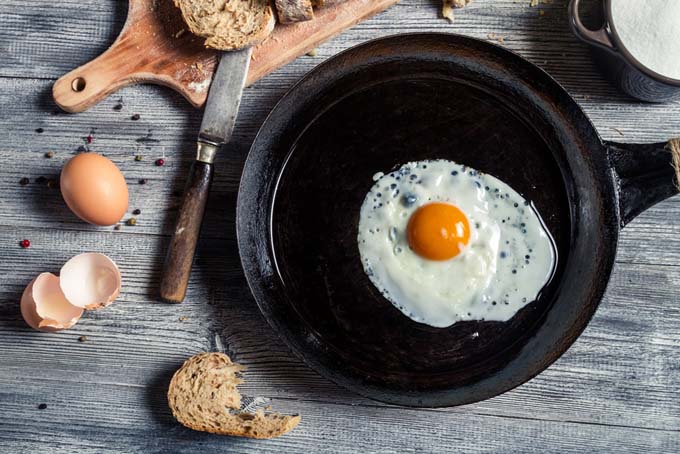
Carbon Steel vs Cast Iron Frying Pans - Which is Best?

• Cast Iron Woks

This material is a highly capable in retaining heat better and longer than other cookware materials. This allows one to continue cooking food even after the wok has been removed from a heat source.

Cast iron is also durable, making this kind of wok last for long periods of time. They are heavy, hence using a wok spatula would be ideal.

• Carbon Steel Woks

This material is immensely popular and the most traditionally used for woks, as it combines quick and thorough heating with durability. It is also inexpensive and lightweight. Food does not stick to the sides of the wok either. Furthermore, they are magnetic, making them capable of working with wok induction ranges.

• Stainless Steel Woks

This material is also durable, like carbon steel and cast iron, but is much less porous than them. Its appearance is sleek and the stainless steel allows for easy cleaning.

However, food may stick to the wok as a non-stick surface cannot be made by seasoning.

• Non-stick Woks

This is a great option for beginners as it is easy to clean and does not require any seasoning. But it may not generate the same level of sear on meats or vegetables as you would get from other woks.

Are there Accessories for Woks?

Yes- these accessories can help optimize the use of a wok and help make it easier to cook with one.

Wok Ring | 10" Wok Rings

• Wok Rings

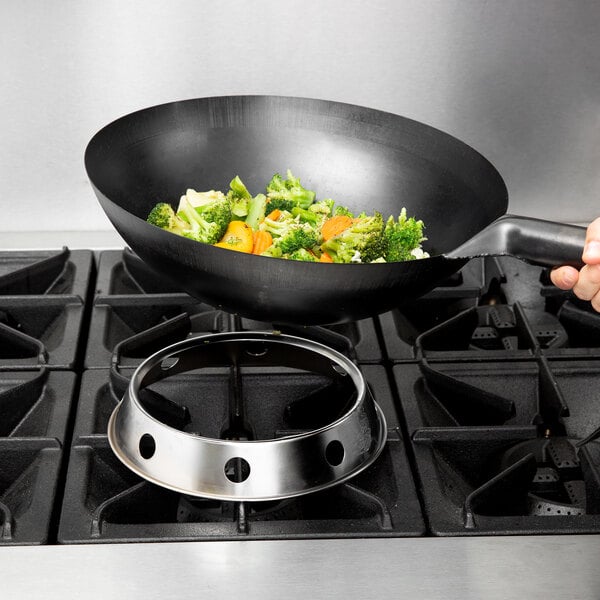
If the cooking station one has is not quite suitable for woks, particularly as the rounded-bottom that woks tend to have makes them wobble on a flat range or gas stovetop, using a wok ring would make one’s range wok friendly.

A wok ring is a piece of metal shaped in a hollowed-out circle that is placed over a gas stovetop or electric range. This supports round-bottomed woks and keeps it close enough to a heat source.

Wok rings may also have holes on its sides which allows heat to transfer better from the heat source to across the walls of the wok.

Joyce Chen Antiaderente Inox Coperchio a Cupola, Acciaio, Charcoal,  13.5-inch: Amazon.it: Casa e cucina

• Wok Covers

This wok accessory is designed to keep food inside the wok hot until it is ready to be transferred.

Furthermore, it keeps any hot liquids from spilling outside of the wok, such as soups or oil.

Although wok covers come in various shapes and sizes, they are mostly dome-shaped to lock moisture in and enable air circulation.

What Can You Cook with a Wok?

While it is commonly used for stir fry, woks can be used in almost every cooking technique out there, including:

  • Boiling
  • Steaming
  • Frying
  • Stewing
  • Smoking
  • Roasting
  • Braising
  • Poaching
  • Searing
  • and Making Soup!

Taken from recipe website Yummly, below is one of the most popular meals that can be prepared on a wok.

• Fried Honeyed Chicken

This is an Asian inspired dish that is claimed to be “easy on the guilt, high on flavor.”

https://www.flickr.com/photos/jeffreyww/40453564000

Only eight kinds of ingredients are needed, which are:

  • 2 chicken breasts
  • 3 garlic cloves
  • 4 tablespoons of soy sauce
  • 3 tablespoons of honey
  • 2 tablespoons of Nuoc Mam sauce
  • 1 tablespoon of finely diced ginger
  • Chili paste
  • Olive oil

The chicken breasts are sliced into cubes and the garlic, chili paste, honey, soy sauce, Nuoc Mam sauce, and ginger are mixed in a large bowl. This mixture is then thoroughly coated over the cubed chicken breasts. The coated chicken is set to rest in the refrigerator for two hours. Afterwards, olive oil is put in a wok and heated, followed by adding the chicken pieces. The chicken is to be stirred continuously and cooked until tender.

Original Recipe at Yumly called “Wok Fried Honeyed Chicken”

What are the Best Woks on the Market?

Taken from review site AllRecipes, below are four of the top-rated woks currently on the market in 2020, based on overall feel, durability, ability, and overall value.

1. Best Value Round Bottom Wok

Wok Shop Carbon Steel Wok With Metal Side Handle, Round Bottom, 14-inch

Wok Shop Carbon Steel Wok With Metal Side Handle, Round Bottom, 14-inch

For a price of $35, this wok is ideal for those seeking to invest in a traditional round-bottomed wok.

This has been highlighted to be able to achieve the desired temperature quickly and adapts just as well to any heat changes. Even with its low price, it delivers great feel and weight, making tossing and flipping easy, has a comfortable handle and sleek style.

2. Best Splurge Round Bottom Wok

Craft Wok Traditional Hand Hammered Carbon Steel Pow Wok, Round Bottom, 14-inch

At a price of $50, this wok has been found to still be relatively easy for tossing food, even with one hand, despite its slightly heavy weight.

It has a more traditional, or artisan, look and feel – being hand-hammered in China – with a wooden and carbon steel handle, round bottom, and a natural, non-stick surface. It quickly heats and adjusts to heat changes as well.

3. Best Value Flat Bottom Wok

Taylor & Ng Starter Wok Set

With a price tag of $43, you will receive a wok cover, a flat-bottomed wok, and a pair of bamboo chopsticks.

This set is ideal for those who prefer the convenience that comes with using a flat-bottomed wok, in which it can be used on any stovetop without wobbling over. It has been recommended for its lightness and comfortability.

Its wooden handle is technically connected to the wok by a metal rod, which protrudes into a hole at the end to allow for easy hanging storage.

4. Best Splurge Flat Bottom Wok

Christopher Kimball for Kuhn Rikon Covered Wok Skillet

Being the priciest out of the group, at $55, this set comes with a glass lid with a steamer hole that is very premium-looking.

The wok itself is flat-bottomed and is praised for its capability of quick and even heating- it is one of the fastest to preheat out of all the other woks that were tested. Its light-to-medium weight and heatproof handle allows the wok to be handled easily, even with one hand.

Which Type of Wok is Suitable for Me?

This all depends on how one will cook with it.

  • If you cook with a gas stove, a round-bottomed, either carbon steel or cast iron wok would work best for you.
  • If you cook on an electric stove, a flat-bottomed, either carbon steel, aluminum or non-stick would work best for you.
  • Induction stove-tops are almost made for cooking with woks as they naturally heat up the entire pan evenly through magnetic induction. The best wok for induction stoves are cast iron ones.
  • What if you don’t have a stove? Electric woks are manufactured just for that. Whether you’re taking it with you to a party, going camping, or your stove doesn’t work, electric woks will do it all for you.
  • Want to go old-fashioned? Try using a fire pit with a round-bottomed wok.

Conclusion

The wok is a very helpful cookware for in the kitchen.

Since it is used worldwide, this proves that its versatility lets one cook many different kinds of food without having to use other utensils.

The kind of wok one needs would depend on factors such as their budget, preference and range or cooking area.

References

  1. “What is a Wok?“, Webstaurant Store, Guide 691 Types of Woks
  2. “The History of the Wok“, Wok History, WokHistory (dot) wordpress (dot com)
  3. “What is a Wok Ring?“, 2020, WiseGeek, What is a Wok Ring
  4. “Wok-Fried Honeyed Chicken“, Yummly, Wok Fried Honeyed Chicken
  5. “The 4 Best Woks You Can Buy, According to Our Test Kitchen“, 2020, AllRecipes, Article “Best Woks”